Telecommunications
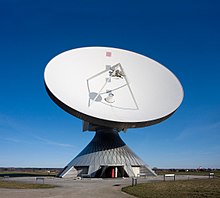
Telecommunications engineering focuses on the transmission of information across a channel such as a coax cable, optical fiber or free space. Transmissions across free space require information to be encoded in a carrier signal to shift the information to a carrier frequency suitable for transmission; this is known as modulation. Popular analog modulation techniques include amplitude modulation and frequency modulation. The choice of modulation affects the cost and performance of a system and these two factors must be balanced carefully by the engineer.
Once the transmission characteristics of a system are determined, telecommunication engineers design the transmitters and receivers needed for such systems. These two are sometimes combined to form a two-way communication device known as a transceiver. A key consideration in the design of transmitters is their power consumption as this is closely related to their signal strength. If the signal strength of a transmitter is insufficient the signal's information will be corrupted by noise.
Instrumentation
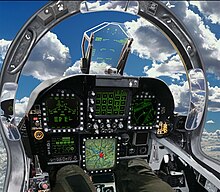
Instrumentation engineering deals with the design of devices to measure physical quantities such as pressure, flow, and temperature. The design of such instrumentation requires a good understanding of physics that often extends beyond electromagnetic theory. For example, flight instruments measure variables such as wind speed and altitude to enable pilots the control of aircraft analytically. Similarly, thermo couples use the Peltier-Seebeck effect to measure the temperature difference between two points.
Often instrumentation is not used by itself, but instead as the sensors of larger electrical systems. For example, a thermo couple might be used to help ensure a furnace's temperature remains constant.For this reason, instrumentation engineering is often viewed as the counterpart of control engineering


No comments:
Post a Comment